Egyptian Writing and History

Introduction:
All the hieroglyphics known by the man are or the
definition of this ancient writings are a system that employs characters in the
form of pictures. These may be read either as pictures, as symbols for
pictures, or as symbols for sounds.
The name hieroglyphic (from the Greek word for “sacred
carving”) is first encountered in the writings of Diodorus Siculus (1st century
BCE). Among the Egyptian scripts, the Greeks labeled as hieroglyphic the script
that they found on temple walls and public monuments, in which the characters
were pictures sculpted in stone and the greeks writed their hieroglyphics in
papyrus or other smooth surfaces. Because of their pictorial form, hieroglyphs
were too difficult to write and were used only for monument inscriptions in
temples and other structures that were important on the country. They were
usually supplemented in the writing of a people by other, more convenient
scripts. Among living writing systems, hieroglyphic scripts are no longer used.
(Dorman,P. & Brunner, H., n.d., para. 1, 2, 3, 4)
Hieroglyphic Overview:
- Hieroglyphics:
"Ancient Egyptian writing uses more than 2,000 hieroglyphic characters. Each hieroglyph represents a common object in ancient Egypt. Hieroglyphs could represent the sound of the object or they could represent an idea associated with the object. "(Bruaw, S., n.d., para.2)

Most ancient hieroglyphics were founded the 4th
millenium(BCE) and comprise annotations incised onto pottery jars and ivory
plaques deposited in tombs.
It is not possible to prove the connection of
hieroglyphs to the cuneiform characters used by the Sumerians in southern
Mesopotamia. Such a relationship is improbable because the two scripts are
based on entirely different systems and as we can see in the text above most of
the cultures that writed on hieroglyphics had their own kind of writed
"language" and code. (Dorman, P. & Brunner, H, n.d., para. 1, 2)
- Rebus:
"A modern type of hieroglyphic writings would be a rebus. A rebus is a picture puzzle that can be "sounded out" by reading the sounds symbolized by the pictures. When these sounds are read aloud together, the statements often becomes obvious. "(Bruaw, S., n.d., para.3)

"I Love You"
- Alphabet:
The alphabet characters were basis for writing hieroglyphics, and if something cannot by represented by any other character, they used to invent names or anything to represent it. (Bruaw, S., n.d., para.1)

·
"HIEROGLYPHS were the writing of ancient
Egypt." (Solonika, J., n.d., para.1)
·
"Each Pharoah had his own hieroglyph. When the
Pharoah died, his mummy would have a name tag with his symbol on it,
identifying the mummy." (Solonika, J., n.d., para.2)
·
"There were over 700 hieroglyphs in the Egyptian
alphabet." (Solonika, J., n.d., para.3)
·
"Hieroglyphs could be written left to right, up
and down, or right to left." (Solonika, J., n.d., para.4)
·
"Did you know that the key to deciphering
Egyptian hieroglyphs was the Rosetta Stone? The Rosetta Stone was a stone with
a message written in three languages all saying the same thing: Hieroglyphs,
Demotic (another form of hieroglyphs), and Greek. If you could read one
language, you had the key to the other two. Even so it took twenty years to
translate." (Solonika, J., n.d., para.5)
·
"The Rosetta Stone was discovered by accident in
1799 by a group of Frenchmen who had gone to Egypt with the invading army of
Napoleon Bonaparte. While these men were preparing to build a fortress at the
town of Rashid, they found the Rosetta Stone." (Solonika, J., n.d.,
para.6)
·
"The man who finally translated the Rosetta Stone
was a Frenchman named Jean-Francois Champollion." (Solonika, J., n.d.,
para.7)
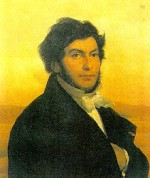
(Jean-Francois Champollion)

